Monday, June 1, 2015

Planning and the D-Day Invasion, Normandy, France


This post isn’t so much a memorial regarding those who sacrificed and gave their life (that was done in a previous post) as it celebrates those who were inspired and planned for the invasion that we refer to as “D-Day.” We often forget to celebrate what was done ahead of sacrifices on the beaches, in the swamps and in the fields just behind the German lines. I thought this might be an occasion to celebrate more of what was done prior to and on this historic day and say thank you to the men and women who fought, not knowing what was to be.

This year we celebrated the 70th Anniversary of Victory in Europe. The event might not have ever happened if the D-Day Invasion had not occurred. I believe it is important for us to know that this was a huge and complex venture. It required considerable planning and strategy. The invasion of Normandy had many moving parts. D-Day is well documented. There are many books, movies and other materials available.

Let me summarize the European portion of the war up to D-Day for the sake of making these few points and providing a place to show present-day images.

St. Mere Eglise Church
 
After World War I and prior to World War II, the geo-political map of the world was turned up-side down. World economies were in shambles. Wall Street crashed in 1929. There was high unemployment everywhere, Europe and the United States. There was a lot of turmoil and dissatisfaction.

St. Mere Eglise Church
 
In Germany, people fell under the influence of those who offered solutions, or alternatively pointed fingers of blame. In Germany it was Adolph Hitler. He ultimately came to power, becoming Chancellor in January of 1933. He consolidated his power, grew Germany’s military and established an axis between Germany and Italy.  Under the notion there were German people in Austria, and Czechoslovakia, he “annexed” portions of both countries in early 1938. In September of 1939 Hitler met with England’s Prime Minister, Neville Chamberlain, France’s Edouard Daladier and Italy’s Benito Mussolini which led to the Munich Agreement, handing over the rest of the Sudetenland land to Germany. In September, 1939 Hitler invaded western Poland. This brought on immediate declarations of war on Germany by Britain and France. The Soviet Union then invaded eastern Poland. In early 1940, German forces invaded Denmark and Norway, followed by Luxembourg, the Netherlands, Belgium and France. France capitulated on June 22, 1940 and British forces were forced to evacuate France by sea. After Great Britain elected Winston Churchill, Prime Minister, Hitler then turned his attention on Great Britain, ordering aerial attacks on airbases in England and then on British cities. In the spring of 1941, Hitler deployed forces to North Africa, the Balkans and the Middle East. On June 22, 1941 Hitler, despite a Non-Aggression Pact with Stalin, began an invasion of the Soviet Union. Fortunately for England, it was during this time the German code aka the “Enigma Code” was in the process of being broken by Alan Turing.

St Michael, Patron Saint of Paratroopers (St. Mere Eglise Church)
 
The United States did not want to enter another war. Isolationist policies were adopted. And so Britain and others fought Germany alone. Germany, Italy and Japan joined together to become the Axis. Japan hoped to dominate the Pacific arena. Italy desired to re-establish it empire around the Mediterranean, and Germany desired to control the rest of the world.

 
Village of St. Mere Eglise
 
On December 7, 1941 Japan attacked the American fleet at Pearl Harbor, Hawaii and four days later, Hitler declared war against the United States. This would prove to be a pivotal moment. Until the attack on America’s fleet, the United States maintained isolationist nation. She was now pushed into war with Japan and Germany.

Once the United States entered the war, an invasion of Western Europe was inevitable. Germany was a formable foe and it was determined that prior to a land invasion American and British air forces had to degrade Germany’s military industry and transportation system, if it were to defeat its army. This was a costly operation in terms of men and air equipment. In the meantime, American and British forces concentrated on the “underbelly” of Europe, attacking the Germans and Italians in North Africa. In early 1943 American and British air forces began bombing Germany around the clock and by summer of 1943 the British and American forces were in Sicily and Italy in September.

Area flooded by Germans
 
Meanwhile, Germany became bogged down on its eastern front with the Soviet Union. Stalin and the Russian winter held the Germans off until allied supplies arrived in 1942. In January 1943 the German army surrendered and the Russians were able to move instead toward Germany. While bombing runs and troop buildups in England were underway, Stalin was pressuring British and American Allies in to begin an invasion on Germany’s Western Front to take pressure off Soviet Union forces. In Teheran in November of 1943, British and American forces agreed to a May 1944 invasion of northern France.

Beach Landing Obstruction


The Germans realized invasion was inevitable. They built fortifications along the coast of France, but thought the invasion was likely to be at Calais.

German Bunker
 
To confuse the Germans, mock airfields were constructed in England and other deceptive actions were planned for the invasion, including the drop of dummy para-troopers and the use of spies and double agents, sending misleading messages, and using riddles and poems. Invasion plans also included an amphibious landing and an aerial force landing. One of the best deceptions was deployment of inflatable tanks and construction of huge installations made of plywood and canvas large enough to support 50 divisions.

German Bunker, Omaha Beach 
 
Other actions taken by Allied forces, in addition to the air war on Germany, were the adaption of armored vehicles to lay bridges, roads, scorch earth, clear mines. They also prepared structures to create two “Mulberry” harbors to allow for the inflow of additional troops and equipment. Nothing could be taken for granted in preparing for the invasion.

German Bunker, Omaha Beach

Though France was defeated and occupied, the French Resistance provided detailed information on fortifications in France, and on the day of invasion took out roads, railroads, taking out telephone lines and electrical stations.

Road Access at Omaha Beach
 
With all these actions in motion, military strategists planned “Operation Overlord” or the day referred to now as “D-Day.” Because a specific date had not been assigned, “D” was a general reference to the “Day” of the invasion, whatever the day that might be.

Omaha Beach Seawall
Omaha Beach
 
What would determine the specific date the invasion took place? The Weatherman, the Generals, and in particularly General Eisenhower (the US Supreme Allied Commander), and the readiness of the troops, who were eager to begin were the keys.

Utah Beach
 
The weather wasn’t perfect on the morning of June 6, 1944. Worst weather in the area in recent history. The forecast was overcast with treacherous seas. But the moon would be full and they needed a full moon to illuminate navigational landmarks for our air and naval operations, and they needed low tides to expose German defensive obstacles on the beaches. Eisenhower was reluctant to wait another month or even two. British and American troops were eager to engage. Under these conditions, General Eisenhower determined it had to be then, directing General Omar Bradley (Commander of American Ground Forces) to begin the invasion.

Utah Beach
 
On the morning of June 6, heavy naval shelling of German positions began. Unfortunately, because of the weather, the bombardment was less effective that hoped. Simultaneously, paratroopers from the 101st and 82nd airborne divisions (under Lieutenant General James Gavin) were flown behind enemy lines. Most missed their targets due to heavy clouds. Some paratroopers landed in the area behind the coast in the area the Germans flooded to hinder invading forces. Some troops overshot their designated landing areas, dropping in villages like St. Mere Eglise (Saving Private Ryan). One point, our guide in Normandy pointed out was that many of the German forces were actually Austrian and Polish soldiers who were forced to fight for Germany after they were defeated. Our guide believed their hearts were not fully into the fight. They too were victims in the war.

Utah Beach
 
Then began the amphibious assaults on 5 beaches. They were referred to as Utah, Omaha, Juno, Gold and Sword. American forces were landed at Utah and Omaha. British forces landed at Juno, Gold and Sword. The beaches were selected because each provided strategic access (roads) to particular villages and towns inland. Other stretches of beach were protected by sheer cliffs or did not have a strategic advantage.

The invasion at Utah beach went well enough. However, Brigadier General T. Roosevelt, son of Teddy Roosevelt with the US 4th Infantry Division (serving under Major General Raymond Barton) landed further down the beach than planned. After realizing his troops were off his target, famously said, “We will start the war from right here.” Nevertheless, they took the beach.

Omaha Beach
 
It didn’t go so well on Omaha Beach. The US 1st infantry Division and 29th Infantry Division (Major General Norman Cota) came against the German 35 2nd Infantry Division at one of the most heavily fortified beaches along the coast. It took several days of fighting to take the German gunners out.

The British 50th, Canadian 3rd, and British 3rd Infantry Divisions (all under Field Marshall Bernard Montgomery) were assigned to take Gold, Juno and Sword beachheads. For the most part, these units encountered initial resistance, but were able to move inland without heavy losses.
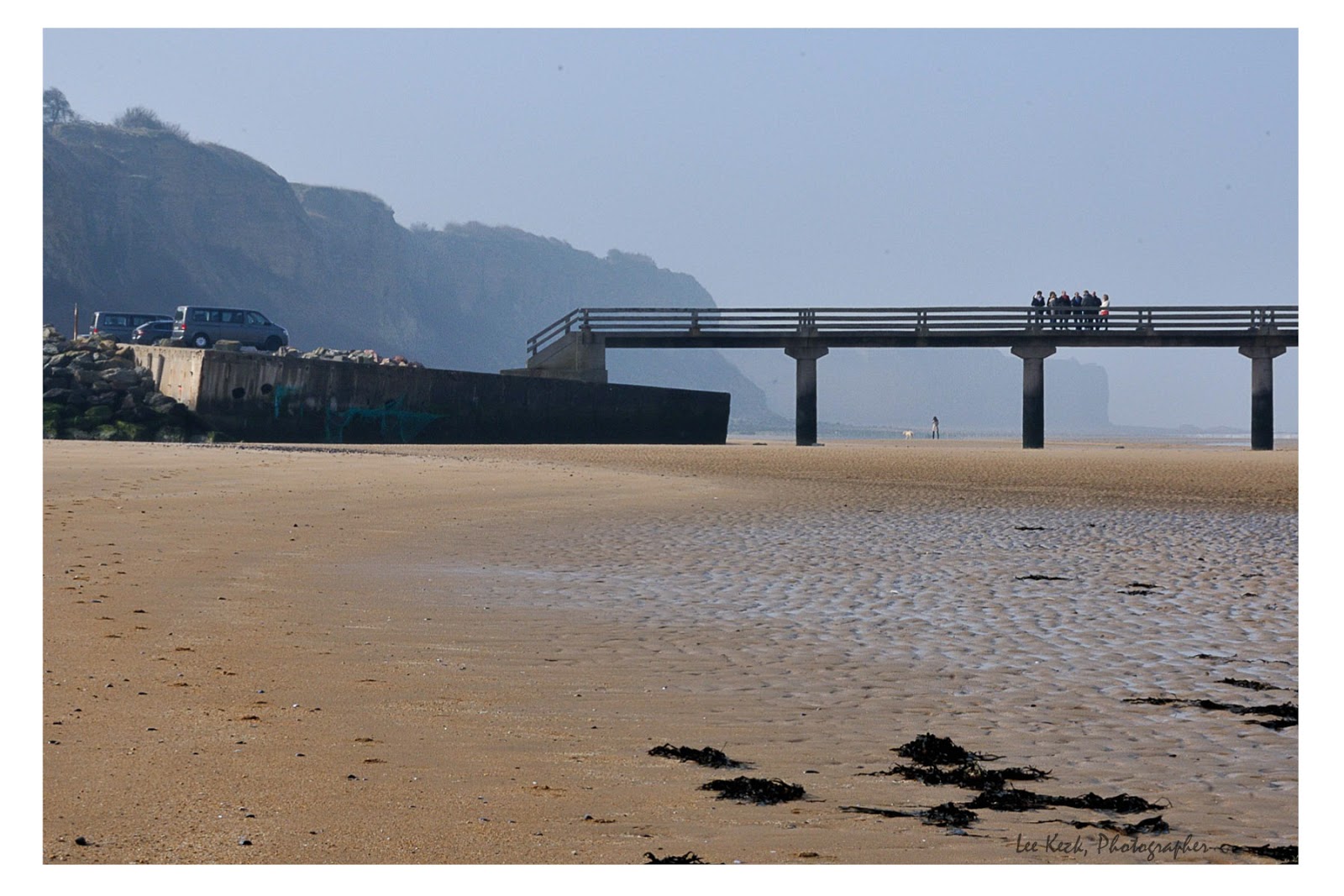
Omaha Beach
 
The objective of the invasion was to create a foothold in Western Europe allowing additional troops and military equipment to be put into place .Once Normandy was secured, further landing of troops and military equipment in place, the Allied Forces could move on into the rest of France and Europe and ultimately the downfall of Nazi Germany. Battles that followed included the Battle of the Bulge, etc.

The invasion of Normandy was for Nazi Germany, the beginning of the end. It was a turning point.

I hope you enjoy the pictures of Utah and Omaha beaches, the church at St. Mere Eglise, and the marshland areas between the beaches and the town. Many additional details regarding the war and Operation Overlord are published and are on-line to those who have an interest. I’ve brutally summarized the war and the D-Day Invasion to make the sole point that planning and strategy, along with commitment to carry through, may be the decisive factor to winning a war.

Resources (I like):
“D-Day, June 6 1944: Following in the Footsteps of Heroes” by Stuart Robertson (our guide in Normandy)
“The Longest Day,” a 1962 movie with John Wayne, Henry Fonda, Robert Mitchum, Sean Connery, Richard Burton, Paul Anka, Red Buttons, Peter Lawford Robert Wagner, Irina Demick and many others.
“Saving Private Ryan,” a 1998 movie with Tom Hanks, Matt Damon, Vin Diesel, and others.
The Imitation Game,” a 2014 movie about the Nazi Enigma Code used during World War II.
D Day: June 6, 1944: The Climactic Battle of World War II by Stephen E. Ambrose
Scripture
Joshua 6.3 – Joshua told his men to march around the city of Jericho blowing trumpets and on the seventh day with shouts the wall of the city fell.
Judges 2.1 – Two spies were sent into the town and with the help of Rehab they escape.
Judges 7.10 – Gideon and Purah listen to their opponents conversations before battle.
Judges 7.16 & 22 – Gideon uses trumpets, empty jars and torches to defeat the Midianites.
1 Samuel 14.12-14 – Jonathan and his armor bearer boldly assault the enemy.
1 Samuel 17.40 – David uses 5 stones and a slingshot against the giant, Goliath.
2 Kings 18.17, 19 & 20.20 – Hezekiah builds a water tunnel and pool to defend the city against their enemy.
2 Kings 20.20 - Hezekiah defies the King of Assyria by constructing a water tunnel and pool and his allegiance to God
Nehemiah 4.1 & 4.15 – Sanballat uses ridicule against his enemy. They realize his tactic and resist it with prayer.
John 18.11 – Jesus tells Peter to put his sword away in favor of God’s greater plan.
Romans 8.31 - If God is for us who can be against us?


Friday, May 22, 2015

Memorial Day and American Cemetery in Normandy


We remember and honor the men and women who have died while in the service of our country on Memorial Day. We began this as a nation since after the civil war. At one time we referred to this day as “Decoration Day” but in 1971 it became an official holiday and was renamed.

Who do you know someone that gave their life for our freedom? Perhaps you have a parent, brother or sister, grandfather or grandmother or great grandfather. You may even have an ancestor you know by name who gave their life. Their names are important for you remember. The war or conflict they gave their life in was not insignificant. Remember, they gave their all.

The importance of their sacrifices became all the more real to me this past March (2015) when I visited the American Cemetery in Normandy (France). The cemetery contains the remains of 9,387 Americans, most of whom died in the invasion or operations following it. The cemetery with its rows of white markers, the memorial to the Unknowns, the reflecting pool, the American Flag, and the nearness of the cemetery to the Normandy Beaches impressed on me the on-going sacrifices Americans have made and continue to make to preserve what we often take for granted.

The men in the Cemetery in Normandy are a fraction of the total number of men who have died for our freedom. There have been many wars. They include (though they are not limited to) the American Revolutionary War, the War of 1812, Mexican American War, the Civil War, the Spanish American War, World War I, World War II, the Korean War, the Vietnam War, the Gulf War, War in Afghanistan and Iraq War. None should be forgotten. Who do you remember?

If you are like me, several of your ancestors fought in those wars. Thankfully, most returned home alive. But there were others who gave all and were killed and did not return home. Those buried in the cemetery I visited in France did not return home. Some died and their bodies were never found and there is no marker on their grave. But remembrance is not confined to a marker or cemetery. Normandy reminds me that even though some lie in distant places, or in some unknown place, we can still remember them. Maybe, you can’t name anyone. Perhaps you are a more recent immigrant. You still can remember those who sacrificed for what you now enjoy. You have the gift of being an American.

Honor them by remembering them. Visit a National Cemetery, Memorial, Tomb for the Unknown or even Battlefield. If one isn’t nearby, meditate on a photo of one of them.

This year I am remembering two men who were my ancestors. I have photos of a grave site and a battlefield memorial to help me remember.

For me, the two the men who fully gave their lives are:

·         Andrew Edmondson (Virginia Ranger, King’s Mountain Battle Field)

·         John M. Butler (Union Army, 11 TN Calvary, Interred at Annapolis National Cemetery)


I am including photos of the burial grounds where my ancestors, Andrew Edmondson and John Butler’s remains are found along with images of the American Cemetery in Normandy. With respect to Andrew Edmondson, his grave site is unknown, as many of the bodies of those who died at King’s Mountain were placed in unmarked shallow graves. The site today is the King’s Mountain National Military Park located in South Carolina. John Butler grave is in Annapolis, Maryland at the National Cemetery. At the American Cemetery in Normandy, there is a wall listing those who have unknown graves.


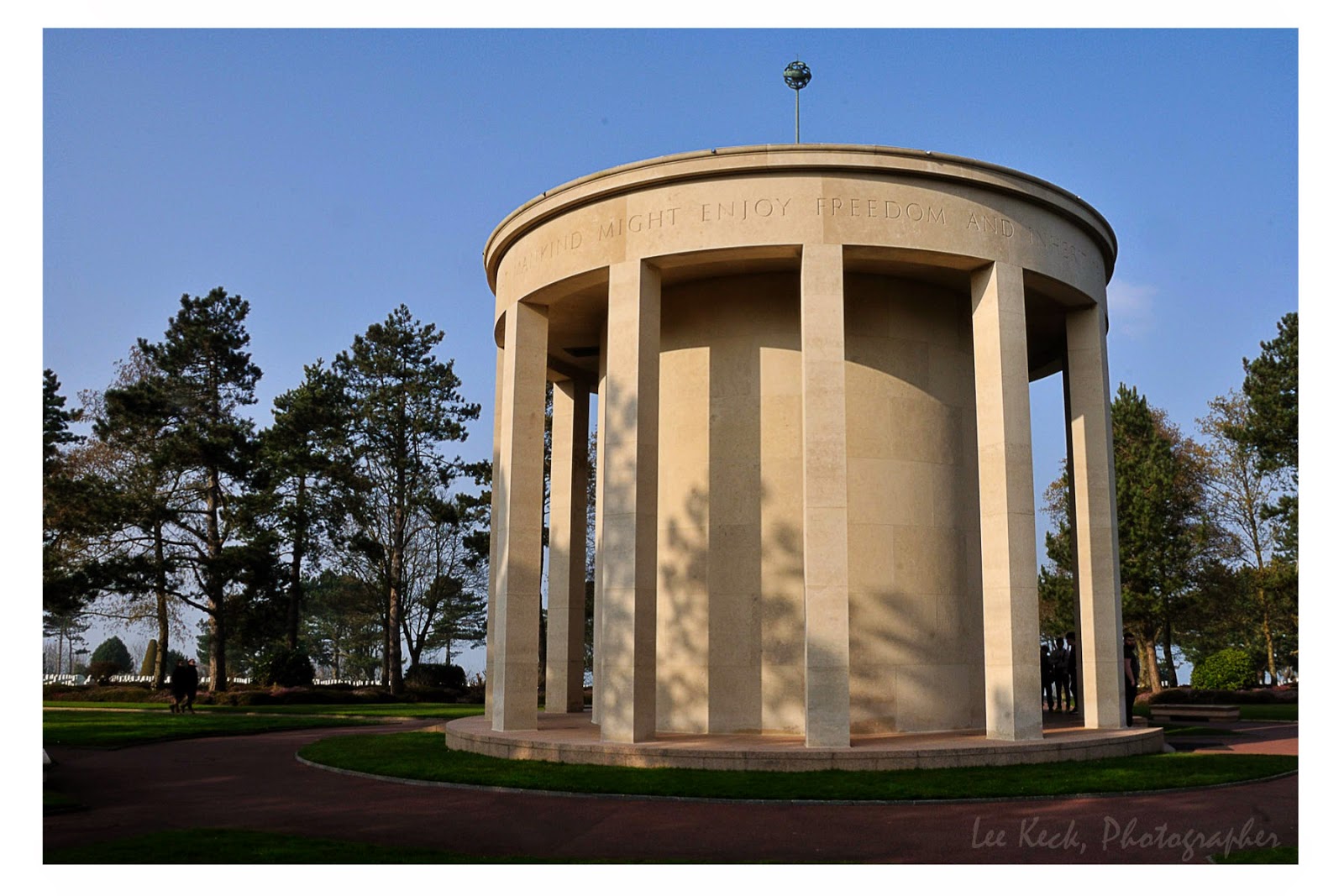
 One last thing I learned at the American Cemetery and Memorial at Normandy. There was a beautiful round chapel there with this quote: “Think not only upon their passing. Remember the glory of their spirit.”


Scripture
Genesis 23.19 – Abraham buried Sarah n the cave east of Mamre (Hebron).
Genesis 25.9 – Isaac and Ishmael buried Abraham in the cave east of Mamre.
Genesis 50.25-26 – Joseph was embalmed and placed in a coffin in Egypt with an assurance he would be taken to the promise land someday.
Exodus 13.19 – Moses takes the bones of Joseph to the promise land.
Deuteronomy 34.6 – He buried Moses in the valley in the land of Moab, but no one knows the place of his burial.
2 Kings 2.1 – Elijah is taken to heaven by a whirlwind.
Mark 15.46 – Joseph of Arimathea took Jesus’ body down, wrapped him in a shroud and placed him in a tomb cut out of rock.
Luke 24.50-51 – Jesus, in the vicinity of Bethany was taken up into heaven.
John 11.38 – Lazarus was laid in a cave with a stone at the entrance.


Sunday, May 10, 2015

Time to Hope. Refugees in Lebanon.


In my previous post, “Tea Time in a Tent. Refugees in Lebanon” I mentioned that my wife, Saundria Keck and her writing partner, Kay Benson had been invited to Lebanon to see how the character development resource they had written for Heart for Lebanon was being used. Pete, the husband of my wife’s writing partner, and I joined them. We wanted to see the schools, meet the teachers, and soak-in their vision for the community-based ministry. The task of the mission seemed almost overwhelming, considering the number of refugees that were coming into Lebanon. I’ve come to see that hope has to begin somewhere, even if it can be offered to only a few. To those with little but despair, it takes something to ignite hope. What might that be?

A day or two before Pete and I went to the Bekaa Valley, we went to one of the schools that was using the character development resource. Our wives had written a series of stories with children in mind. So the idea was for them to tell a story to a group of students as good storytellers can do, involve the children in the activity and see what they learned.

When we arrived at the school before classes were to begin, the children were playing in the parking lot-playground. There was artful graffiti on the playground walls and the kids quickly came up to us, wanting us to take their photographs. Despite the language barrier, Pete and I enjoyed their antics, trying to get us to take their pictures with their friends.

Once inside, my wife and her partner told the story of David and Saul in a desert cave (1 Samuel 24). It’s the one where David, in the darkness of the cave, cuts off some of Saul’s robe without his being aware of it. Of course, the children enjoyed the picture of Saul going into the cave and doing what he needed to do, while learning too of the self-control David had to use in that situation. Afterwards, the children sang animated songs where you sing, raise hands, clap, spin around, and do all the things kids like to do. It was a fun morning.

The children were well-behaved. They spoke familiarly with teachers, but with respect also. It impressed me that when one girl showed up later in the headmaster’s office because she felt ill, she also begged to stay at school. Children at the school enjoyed being there and stayed long after classes ended for the day.

Leaving our wives at the school, Pete and I left with two Heart for Lebanon staff women to visit the home of a Christian Iraqi family. The father had recently had surgery for a serious life-threatening condition and was concerned he might be having complications. We learned the family had little money, but somehow raised some and that someone unknown to them paid the remaining amount to address his medical need. We suspected the surgeon provided the surgery as a humanitarian gesture. The family was grateful but concerned about his current situation and any cost that might accompany further treatment. The building they lived in was dreary, in a poor area of Beirut. You entered through a locked gated door and took a small elevator up to the 3th floor. Their apartment was 3 or 4 rooms with photographs of their boys on 2 different walls. The mother had her hair pulled back and did not wear a head covering. The father was a tall, large man and wore a brown robe typical of many Middle East men. One son, maybe 10 or 11 years of age was there. He had an older brother who came in, they discussed his being stopped by officials and given a warning and then sent on his way. He did not have his “papers” with him. He didn’t stay long and left to work at an odd job.

Over Lebanese coffee, similar to strong Turkish coffee, we asked them how they came to be in Beirut. They explained to us that because they were Christians they were forced to leave Iraq, like many others. Lebanon had been good to them, while at the same time it was a struggle financially as well as fitting in. What was amazing about the visit was that the two women who accompanied Pete and me then asked them about other aspects of their life. When it came to school, they learned the younger boy had missed several days of school. They probed further and learned that something had happened in his school in which the boy was blamed wrongly. Another boy had said something the teacher thought he had said. She was mistaken as to who said it. He had been reprimanded and felt that the teacher no longer liked him. The women with Heart for Lebanon talked more them him. They wept with him and his mother. They carefully cobbled a plan together for them to take. We prayed with the family, the husband’s planned visit to the doctor and for their two sons. Then we left. After the home visit we were all emotionally drained caring about people. It was good.

 
We returned to the school. Our wives had spent the afternoon, while Pete and I had gone on the family visit, discussing the needs of the children, future work and the work that was going on at the school. Even though it was late in the afternoon, students were still present. Some were on the playground. Some were practicing on keyboards. They even have an ambitious goal of doing a music production in the community. Other children were reading. There seemed to be no hurry for anyone to get home.


Even though the three schools run by Heart for Lebanon are “non-formal” schools (neither funded nor approved by the Lebanese government), these schools allow marginalized refugee children not to fall behind in their academic development. We determined it was an amazing place.

If there was a definition of hope, these schools embody it. The home visits, the school program, the Bible studies they offer, show a community of people coming alongside refugees who are desperate and alone, struggling to find a way forward. In this place, if hope is to be found at all, this is a ministry that can ignite it. The staff with Heart for Lebanon openly live a hope that is solid. Although there is despair in many places in the world, there is also hope. Where there are Christians there is hope.


My wife, Saundria and her partner, Kay are passionate about character development. They have developed resources for families to use that use the Bible as their basis. Those who are interested in resources to use with children are encouraged to visit their blog: Pass the Bread (passthe breadmon.com) and check out their bookstore resource section.


Meanwhile, pray for those who are ministering to people in difficult situations. Information about the ministry, Heart of Lebanon can be found in my previous post, “Tea Time in a Tent. Refugees in Lebanon.” I encourage you to also visit their website: http://www.heartforlebanon.org/

 
Scripture

Ruth 2.10 – Boaz took notice of Ruth, a foreigner, and found favor (and a hope).

Jeremiah 29.11 – God has plans to prosper us, plans that give us a hope and a future.

Matthew 7.24 – Hearing and practicing the gospel is like a house built on solid rock.

Luke 18.20-27 – What is impossible with men is possible with God.

Hebrews 11.20-21 – By faith, Isaac invoked future blessings on his sons, Jacob and Esau.


Sunday, May 3, 2015

Tea Time in a Tent. Refugees in Lebanon.


The Bekaa Valley
 
Recently I did something I never thought I would ever experience. I went to a refugee camp in the Bekaa Valley of Lebanon, helped distribute food and then visited a family in their tent. It was almost surreal. The mostly women and few men who came to pick up their monthly food ration had to first come by with their identification card, get checked off a list, and then be given their large bag of food, supply of hygiene supplies and cooking oil. I estimated each bag weighed sixty-five or seventy pounds and consisted of pasta, rice, beans, flour, canned chicken and tuna and vegetables. The hygiene products consisted of soap, shampoo, detergent, paper towels and toilet tissue. They also received cooking oil. The bags contained no fast-food or “processed-food” items. There were no power bars, potato chips, candy, peanut butter, jelly, or soft drinks in the bags.

Food Portions
 
After the food bags were distributed to approximately 125 families, several of us went to the tent of one family for a visit.  To be eligible for the supplies, recipients grant permission to visit them in their tents. Not speaking Arabic, I and my friend Pete, accompanied three staff workers to the tent.

Getting Ready for Distribution
 
We followed the man to his tent, which turned out to be a wooden frame structure with tarpaulins on the top and sides. Blocks and dirt held the end of the tarps down at their sides. There were three rooms to the tent the best I could figure. There was a kitchen, a living room, which appeared to also be a bedroom at night, and I suspect the third room was another bedroom. We entered, and as I was one of the first to enter, I did not notice that I should have removed my shoes. I was about to turn back to do so, but was told it was acceptable. Those who followed me left their shoes at the entrance. I discovered that once you entered, there were large carpets on the ground that covered the entire tent area and many pillows. There was also a small stove near the center of the room that the family used to provide heat when it was cold.  We sat down and the man, whom I guess was in his late 20s or early 30s asked if we could like tea or coffee, as hospitality is very important in their culture. Out of courtesy we accepted.


An older man, already seated on the carpeted-floor, was the father of the younger man.  I would guess his age to be 65 or so.  The younger man called his wife into the room. I could see she was very pretty even though most of her head, except her face was covered in black. She carried a young boy with her. He was 7 or 8 months old. She handed the child to the younger man and went to make tea. The older man proceeded to “roll” a cigarette using a small sheet of thin paper and loose tobacco. He licked its length and put it in his mouth. It reminded me of how men rolled cigarettes in the rural south in the fifties when I was growing up. The older man lit up his cigarette. The younger father apologized for this father’s smoking and told us that his father didn’t have much to do in the camp, except smoke. He didn’t like his father smoking so much around his infant son, but it was his father. He was concerned about the “second-hand” smoke affecting the health of his son. He was very proud of his son. He wanted us all to see him, holding him out so we could see how big and long he was. I realized he was so much like any middle-class American.

Paperwork
 
Pete and I asked them how they came to be in the refugee camp.  They told us that it had become too dangerous in their neighborhood in the city of Aleppo. There was a lot of shelling, people were being killed and it was simply not safe. We didn’t ask him which side was shelling them. It was enough to know that the civil war was dangerous to everyone, even those who were not engaged in the fighting. At some point they decided to simply leave everything, their home, their jobs and more distant family. They came to Lebanon with very little and spent several months in one camp but then decided on the camp we were in because there were refugees there from Aleppo. Even though they did not know them, the people in this camp were more ‘familiar.’ I assumed they meant that their customs and ways were more similar to theirs.

 
At some point, the younger man’s wife returned with the tea. The young man served his father and then he served me. The tea was a small glass cup that was so hot I just about spilled it when he handed it to me. I set it down on the carpet as soon as I could and kept my fingers on the lip of the cup so it wouldn’t tip over. I didn’t want to spill it on their carpet. Everyone after me did pretty much as I did. I wondered about the water used in making the tea. There were no state “approved” water sources in this camp, only water used to irrigate the crops grown beside the camp. I decided the tea was so hot, I didn’t need to worry about bacteriological contaminates.


The young father handed his son to his wife, to get him out of the smoky room. He told us he had only one wife. It was all he could “manage.” I wondered about the translation of the word we heard as “manage.” Was one wife all he could afford? Was one wife all he could emotionally support? Were the dynamics of several wives, more than he could handle? He told us his father had two wives. There was a pause. After the silence, he then picked back up on the conversation to say, his father only had one at a time. He knew all his visitors were Christians.

The Grandfather
 
During the visit, we learned that the food bags were appreciated and that they helped a lot. There wasn’t enough to completely provide for them for a full month, but it was a great help. He or members of the family would find odd jobs to finish providing what was needed. Thankfully, they had no medical needs. Two or three younger women came into the tent and went to the other room. I began to count the number of people the food bag was supporting. My count was up to at least 8 people. Then we learned the family had a second tent and that they received a food bag also, which was shared between the two tents.  I was actually relieved. The prophet Elijah (1 Kings 17.7-24) may have had a jar that never seemed to go empty, but one bag of food feeding 11 or twelve people for a month would be another miracle.

The Son
 
Near the end of our conversation, we asked them how we might pray with them. Their one request, that peace would come to their county and that they could return home. It was a simple enough request, but I thought, how often does conflict in the middle-east end so suddenly. It was sad.

One of our interpreters, who had remained quite throughout most of the visit, spoke up, making it clear we would be praying in the Name of “Jesus,” whom the Koran refers to as the “Miracle of God” and to whom Christians pray because of His saving grace to all who have faith in Him. I don’t remember much else he said other than that. My mind was so riveted on that one surprising statement, I couldn’t focus on anything else.

We then prayed for them, making sure we prayed for peace in Syria and that they could return home. We prayed for them in other ways too, for health, for safety in the camp, for their children, all in “Jesus Name.”

We were told building personal relationships are very important in their culture and that they expect people of other faiths to own what they say they believe. It is about dependability, patient love, trustworthiness and integrity. Anything less is insulting. They don’t think much of religious tracts and pamphlets. Trust is earned. I had to ask myself, where am I?

 
I’ve included a water-colorization of a photo of the men we met. I promised them I would not publish their images. Helpfully you will get a mental image of them and the situation from them and by my description included in this account. I don’t think I’ve revealed their identities. There are many camps throughout Lebanon and many, many refugees.

After spending several hours at the camp, we drove to the school run by Heart for Lebanon in a nearby village. Mind you, the school isn’t large. It is a converted space the non-profit is renting. It is very close to the Syrian border. Heart for Lebanon isn’t a large relief agency, although they do work with others as the need is huge. They do what contributions allow them to do. They currently serve approximately 170 children in their 3 schools.

The purpose of the visits to the families receiving food support is to see how the families are doing. To establish relationships, encourage them, and build trust. At the conclusion of each visit, they cry with refugees if need be, pray with them and make other arrangements where and if appropriate.

I saw God working in hard places.


How was it that I was able to go to Lebanon and more specifically, make a visit to a refugee camp? A year or so ago my wife was asked to write curriculum for children not attending formal school in the country of Lebanon. It was for use in the three schools that Heart for Lebanon operates. This visit was for her to see how the materials were being used and to talk with teachers about their use. To be honest, I was impressed with what they provide in the schools. The objective is to make sure children do not get behind in math, language and other essential knowledge. They have art and music programs. They have playgrounds and provide for physical activity. After school, they make available electronic keyboards and other musical instruments to children to practice. Children love school and want to stay after school.

Boys in the Camp
 
The relief agency, Heart of Lebanon, is a Christian humanitarian organization providing food, hygiene supplies, education resources, and other services to refugees from both Syria and Iraq. The refugees are Sunni Moslem, Shiite Moslem and Orthodox Christians. They were driven out of their countries because of the civil war going on in Syria and the partisan conflicts between Moslem factions and other ethnic groups.

The country of Lebanon has been sheltering refugees from these conflicts since 2006. It is estimated that 20 to 25 percent of Lebanon’s population is made up of refugees. The number of Syrian refugees who have registered with UNHCR (United Nations High Commission on Refugees) is in excess of 1.2 million people. Obviously, the actual number is greater. In addition to Syrians, Lebanon has established “formal” camps for Iraqi and Palestinian refugees. Lebanon is overwhelmed. It is also a county that was occupied by Syrians for 20 years. Imagine if you lived in a county where 20 percent of the population of our country was made up of refugees from adjacent countries. Then think about the burden it would place on schools, health infrastructure, welfare and other systems. It would stretch any county to the point of breaking. Just prior to our trip to Lebanon in March of this year, the country of Lebanon determined it could no longer provide resources to support these refugees, other than allow them to continue to come and find safe haven until they could resettle elsewhere.  While safe from conflict, the refugees are still subject to water supplies that are not safe for drinking and sanitary facilities that are inadequate. During the heavy snows shelters failed or even collapsed. Carpets, mattresses, clothing and electronic possessions were soaked. But at least they aren’t being murdered or shelled. And then, Syrian refugees are not allowed to send children to school, obtain jobs, or pursue citizenship.

 
Heart for Lebanon provides food supplies to over 2800 refugees. They have three distribution centers. One is in Beirut, another the Bekaa Valley and one in Sidon in the south. Heart for Lebanon also maintains education facilities in the three locations. In order to make a difference, the organization selects families for all of its services – referred to as “Community Care” and “Non-Formal Education.” They also make available Bible Studies for Iraqi and Syrian Christians and those interesting in learning more about the Bible. It’s a place where faith is strengthened.

I like what my pastor preached recently: “(Our lives should) Testify to the gospel of God’s grace.” The humanitarian effort underway in Lebanon is a spiritual opportunity. Our mission is to help people to become more open to Christians and their beliefs, if not to the grace of Jesus Christ.

Their website, should you be interested in learning more or want to contribute is:

Their goal: Helping people out of despair into hope.
I guess it’s time for tea.
 

Scripture

Matthew 5.7 – Blessed are the merciful, for they will be shown mercy.
Matthew 5.44 – Jesus said, “Love your enemies and pray for those who persecute you.”
Matthew 25.35-36 – To those who will be blessed, He said, “I was hungry and you gave me something to eat, I was thirsty and you gave me something to drink, I was a stranger and you invited me in.”
Matthew 25.40 – Jesus said, “Whatever you did to the least of these, you did for me.”
Luke 10.36 – [Jesus’ Parable] Those who are different from you can be a good neighbor.Luke 14.13-14 – Give food to the poor who cannot repay you and you will be rewarded at the resurrection.
John 4.4-42 – Jesus’ encounter with a Samaritan women resulting in many encountering Christ.